Airbnb was almost bankrupt in 2008. Its founders sold novelty cereal boxes just to survive.
Today, it's a global travel platform worth billions.
They didn't win by outspending hotels on ads. They built a trust engine that removed the doubts standing between someone discovering a property and actually booking it.
Here's how they did it, and what you can learn from their strategy.
1. Attract: Fix What People See First
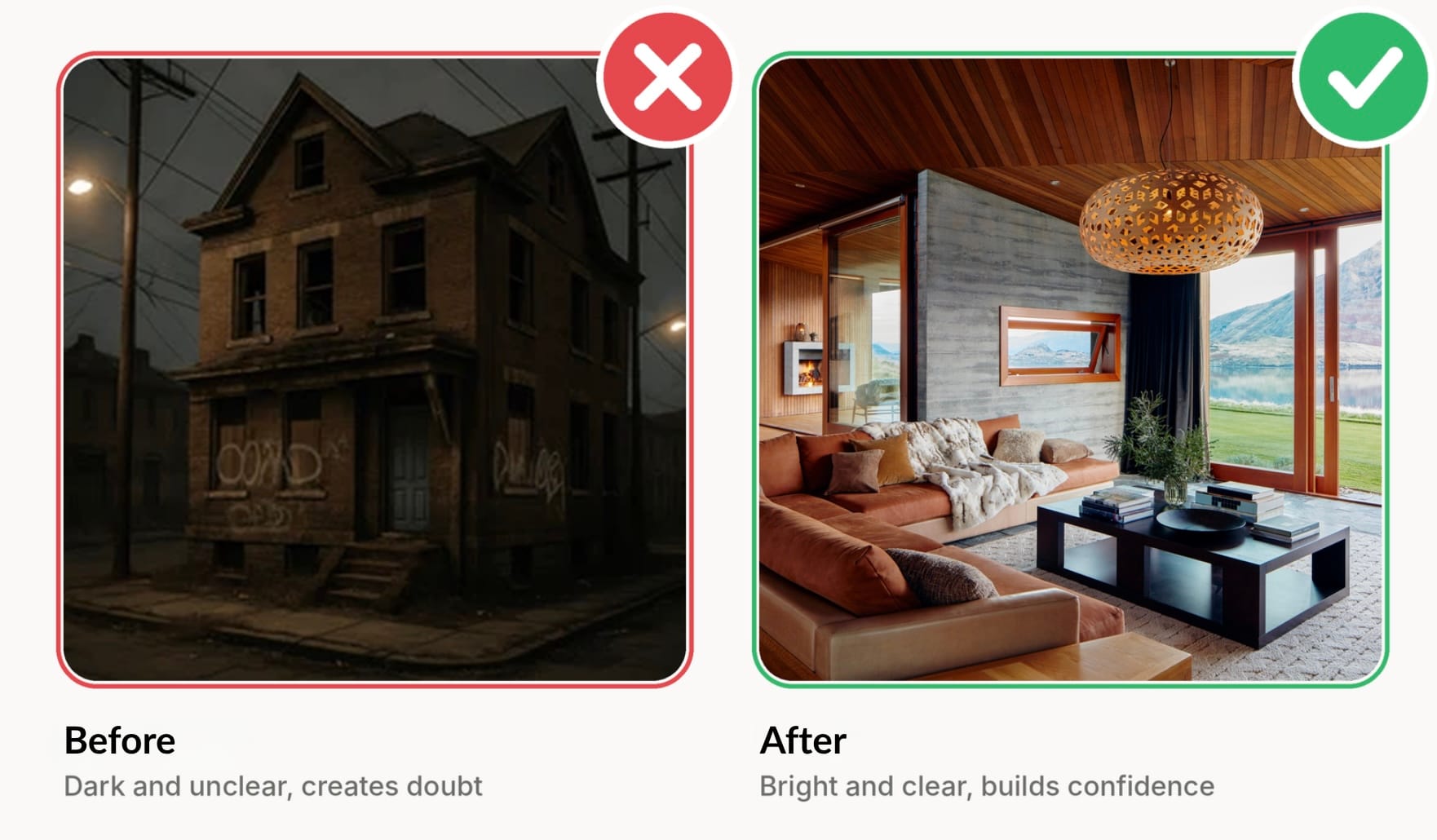
In the early days, Airbnb listings had poor photos. Travellers couldn't get a good sense of what they were paying for.
So the founders started visiting hosts’ homes and taking professional photos of their properties.
The change helped travellers see what they could expect, making unfamiliar homes feel less risky to book.
The takeaway: Before spending more to attract customers, make sure your offer is presented in a way that builds interest and gives people confidence to take the next step.
2. Nurture: Give People A Reason To Come Back
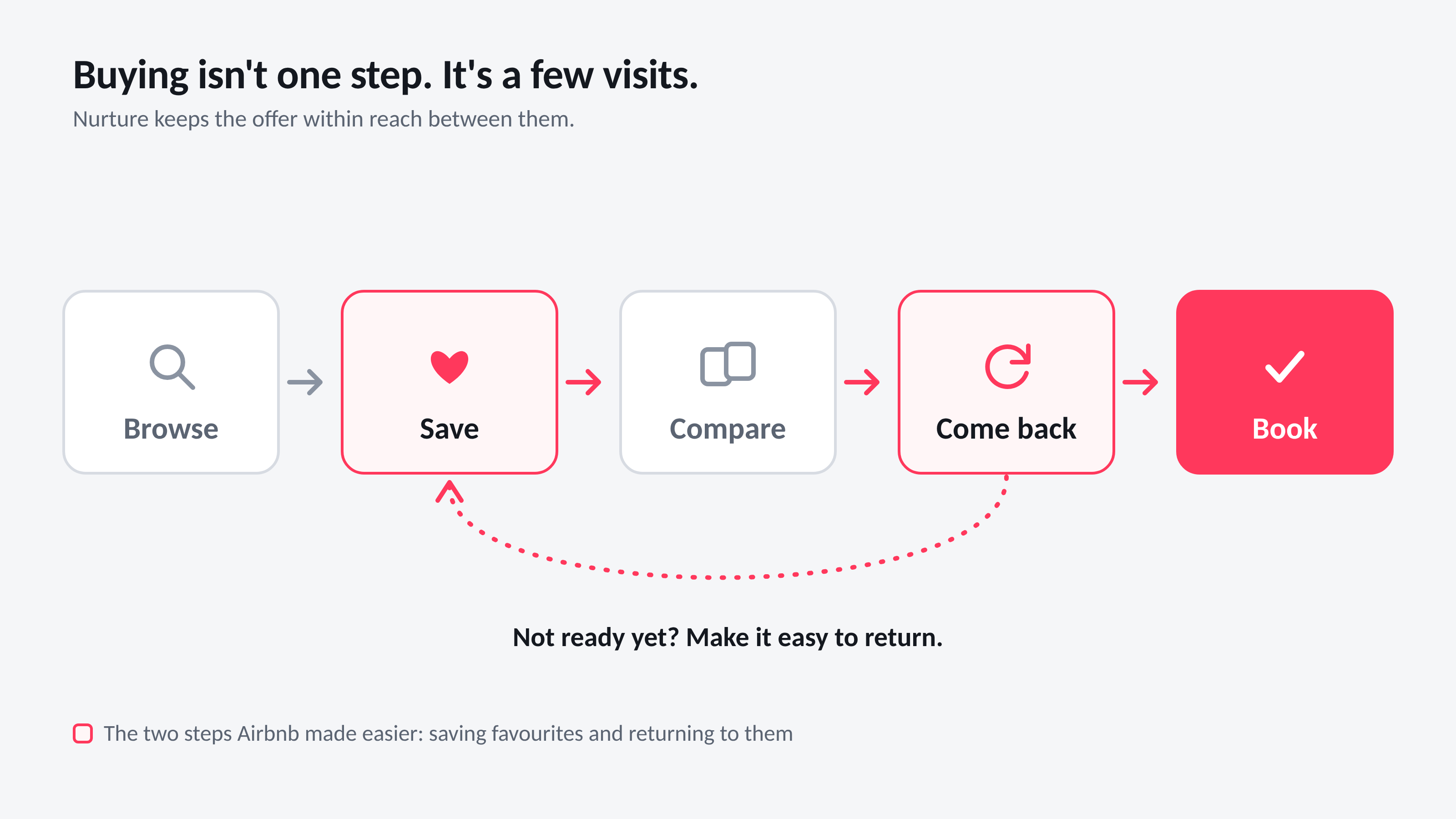
Most travellers don't book the first property they see. They compare prices, check locations and save places they like.
Airbnb made it easier to browse listings, save favourites and return to them later.
The takeaway: Not everyone is ready to buy straight away. Make it easy for people to keep considering your offer.
3. Convert: Make People Feel Safe Buying
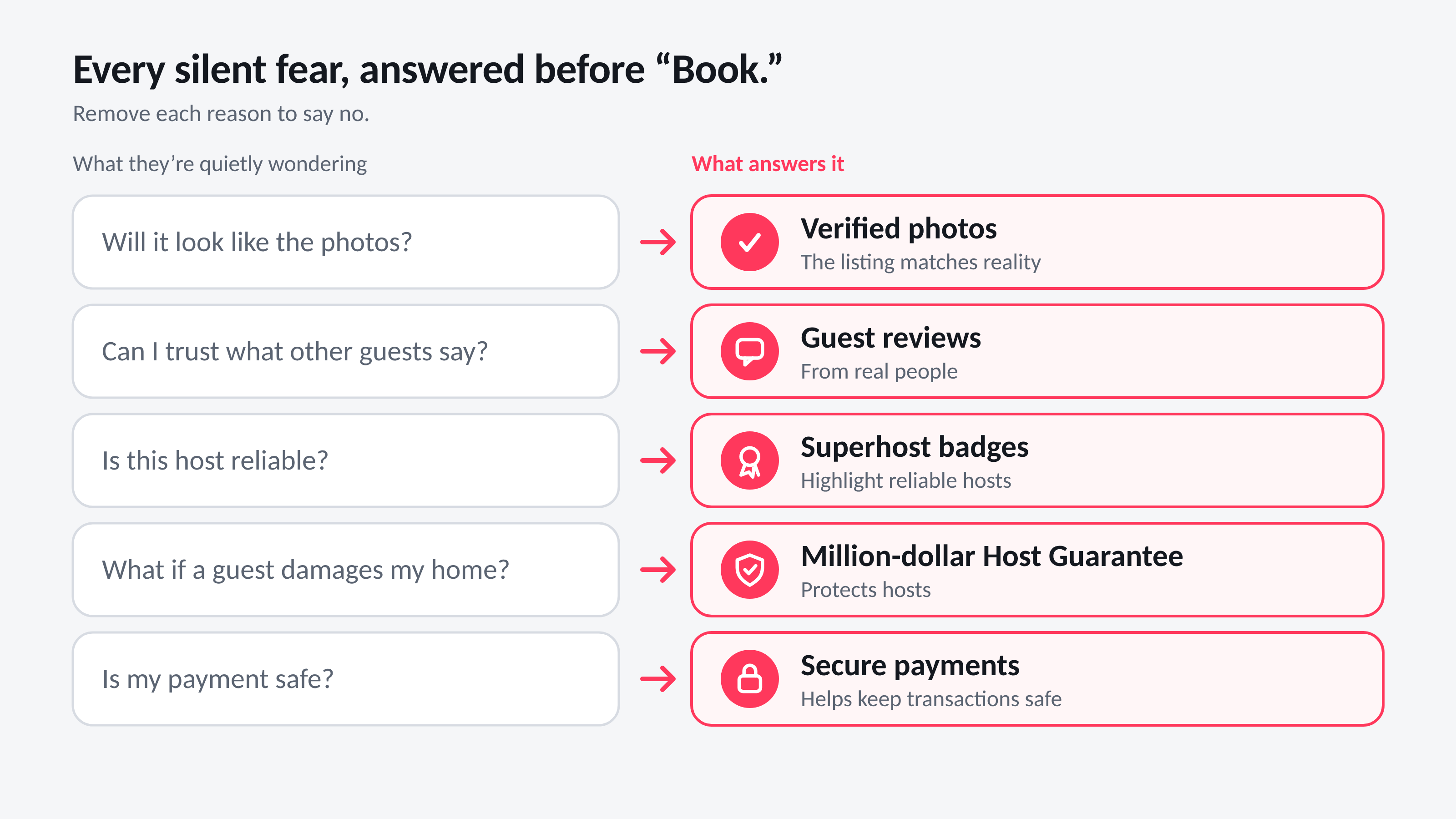
Keeping someone interested isn't enough. You have to remove every reason they might say no.
Imagine paying to stay in a stranger's home without knowing anything about the host.
Airbnb addressed that concern with guest reviews, host profiles and detailed property listings. These gave travellers more information before committing to a booking.
The takeaway: Don't just convince people your offer is good. Identify what makes them hesitate and give them a clear reason to feel confident buying.
4. Activate: Make The First Stay A Good One
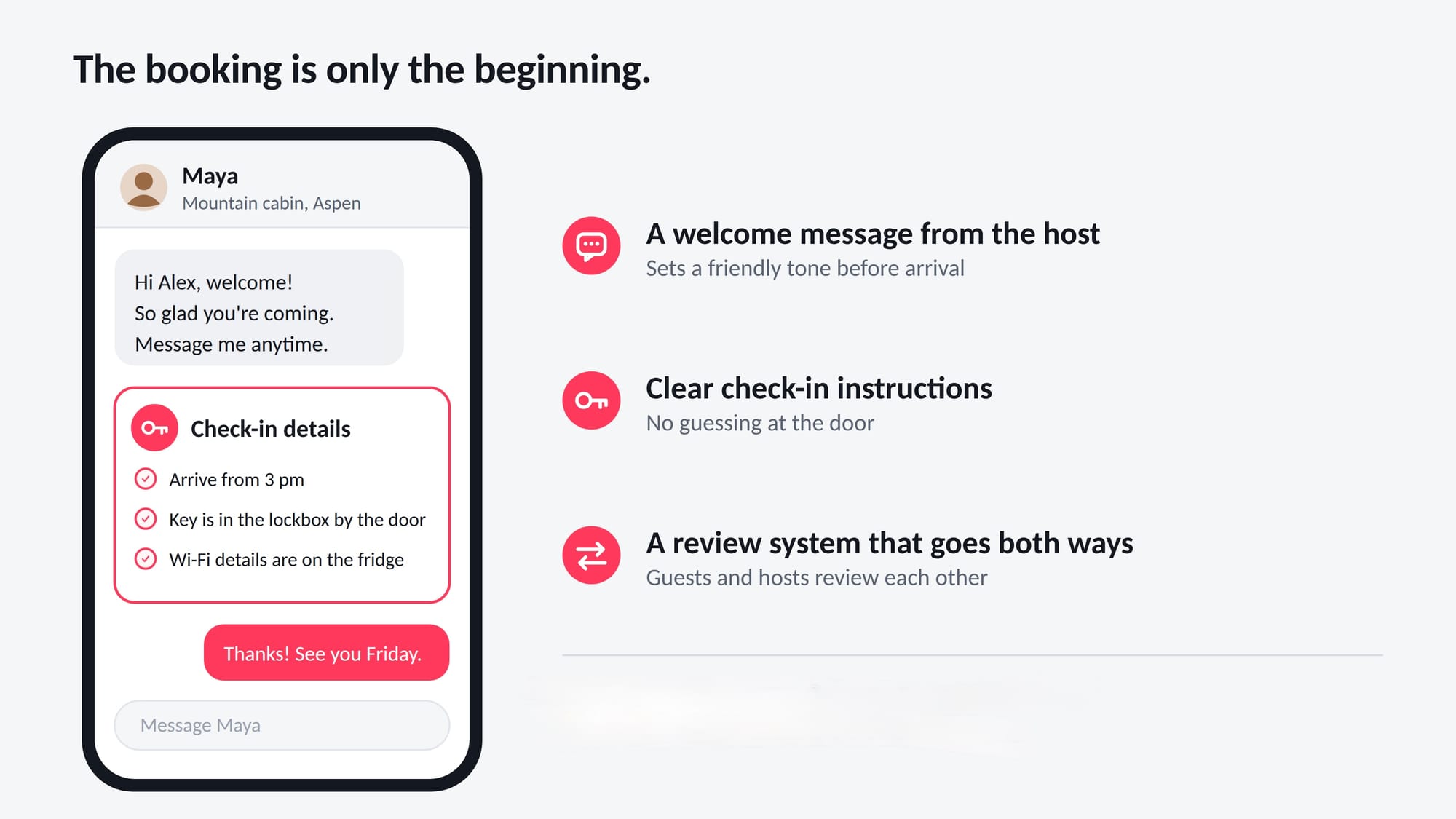
A booking means nothing if the stay turns into a bad experience.
Airbnb needed guests to know how to check in, find the property and get what they expected from their booking.
- A welcome message from the host
- Clear check-in instructions
- A review system that went both ways
A smooth first stay gave guests a reason to trust the platform and consider using it again.
The takeaway: A customer paying you doesn't mean you've delivered value. Their actual experience determines whether they trust you enough to return.
5. Monetise: Give Customers More Reasons To Spend
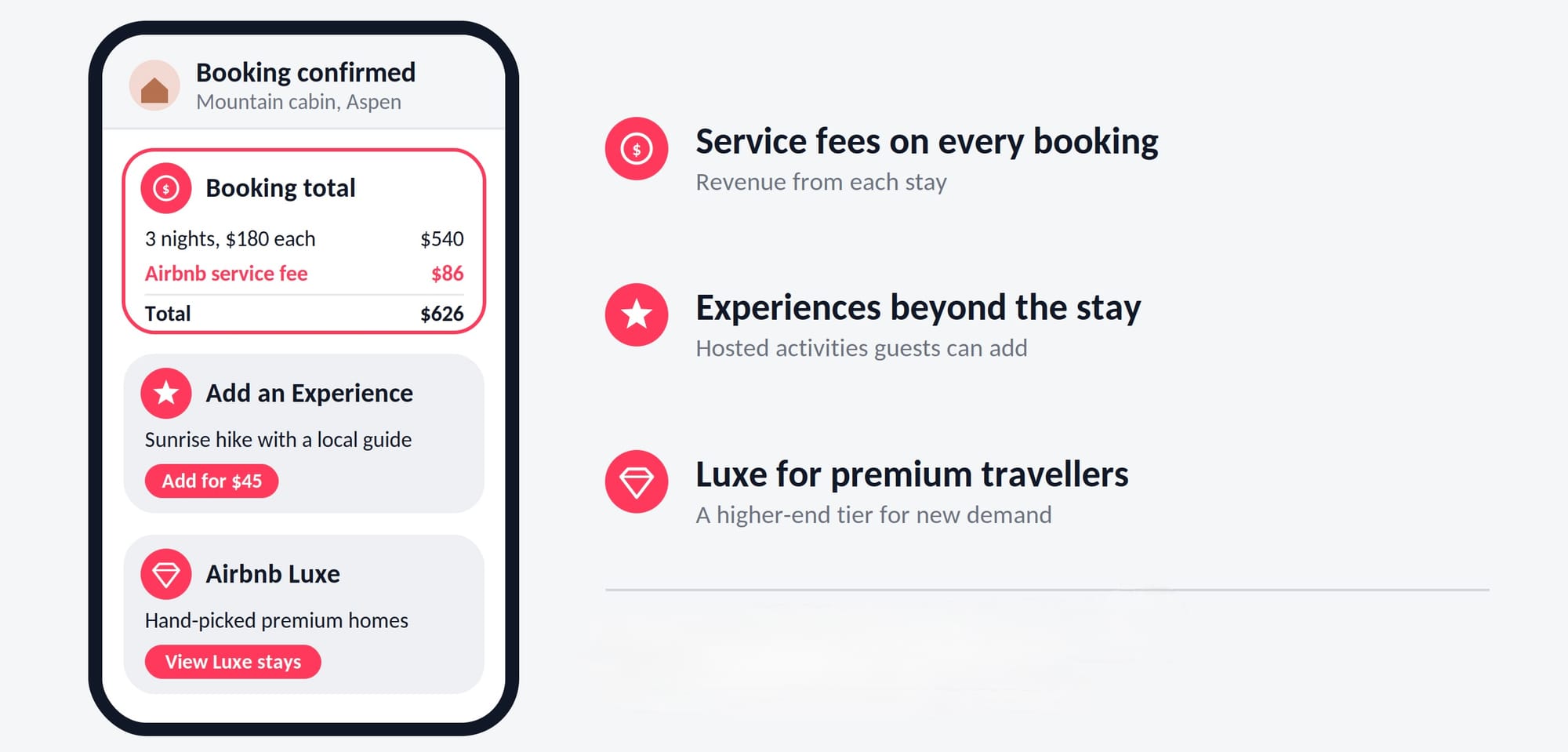
Once people trusted the platform, Airbnb created more ways to generate revenue:
- Service fees on bookings
- Airbnb Experiences
- Luxury stays through Airbnb Luxe
These gave Airbnb more ways to earn revenue while offering travellers more options.
The trust they built unlocked more value over time.
The takeaway: Once customers trust your business, look for relevant ways to serve them better and create more value.
6. Amplify: Let Customers Help You Grow
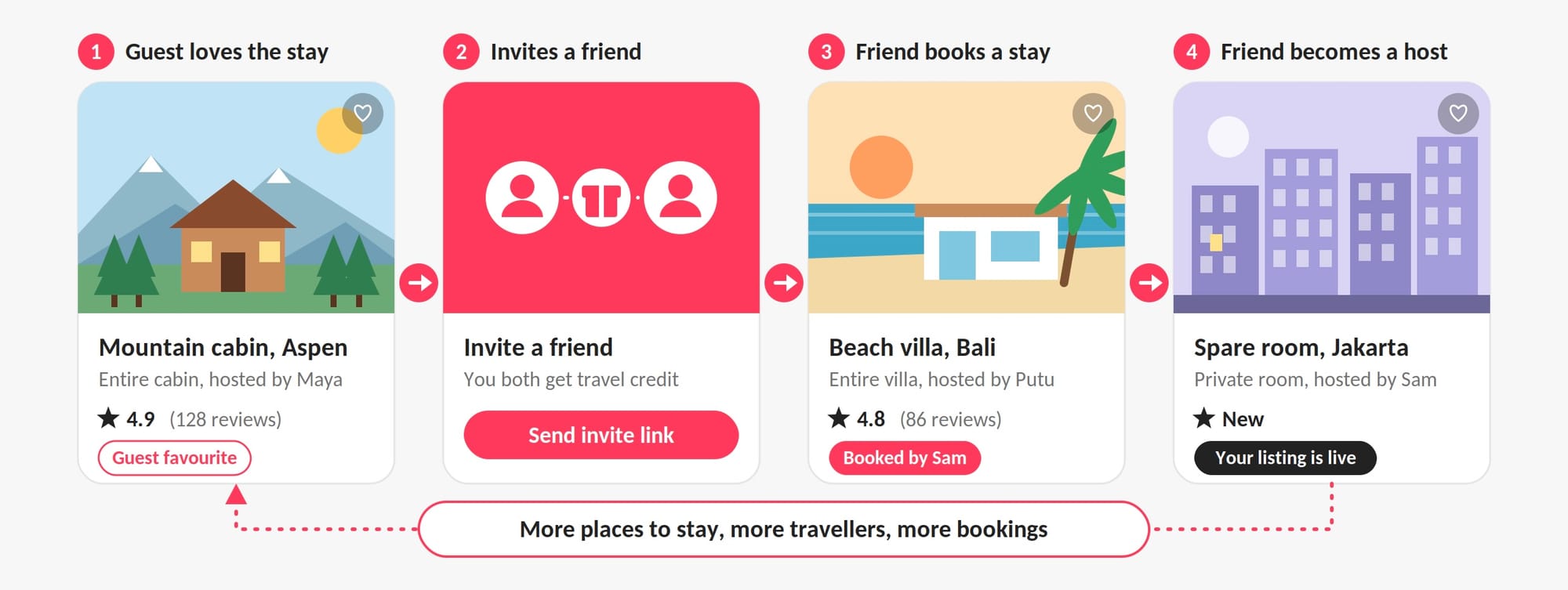
Every happy stay gave guests a reason to tell their friends about Airbnb.
The referral programme rewarded both the person inviting a friend and the person signing up. Hosts could also bring more hosts onto the platform.
More hosts meant more places to stay. More travellers meant more potential bookings for hosts.
The trust engine started feeding itself, with customers and hosts helping bring more people into the platform.
Growth wasn't just about spending more on ads anymore. The people already using Airbnb were helping it grow.
The takeaway: Your existing customers can help you reach new ones. Give them an experience worth recommending, then make it easy for them to spread the word.
The Strategy Behind Airbnb's Growth
Airbnb didn't grow just by attracting more people to its website. It had to earn their trust, turn that trust into bookings, and give customers reasons to return and recommend the platform.
That takes more than marketing alone. It requires a system that connects every stage of the customer journey.
That's exactly what the Full Stack Growth System is designed to do:
Attract → Nurture → Convert → Activate → Monetise → Amplify.

Each stage builds on the previous one. More traffic won't fix a weak conversion process. More bookings won't create sustainable growth if customers have a poor experience. And referrals won't happen if people have no reason to recommend you.
The key is to find where your business is losing momentum and fix that stage before simply spending more to attract new customers.
If you want to see what a full‑stack growth system looks like for your business, I put together a free PDF that walks through the six stages stage by stage
→ Reply "AI" and I'll send it straight to your inbox.
Or take the faster route: book a free Growth Audit and my team will map your full customer journey, show you the biggest leak, and walk you through exactly how to fix it.