In 2009, Domino’s Pizza was in trouble. Same‑store sales were falling. The stock traded around $3 a share. Customers said the pizza tasted like cardboard.
Most companies would have changed the recipe, run new ads, and hoped for the best. Domino’s did something different. They didn’t just fix the pizza. They built an entirely new operating system for the business. One that connected ordering, making, tracking, and keeping customers in a single loop.
The pizza got better, but that’s not what drove the stock to over $500. It was the system. And the way they built it holds the clearest lesson I know for any business still treating growth as a collection of tactics.
What Matters This Week
Here are 4 system lessons from Domino’s that most businesses still miss.
- They turned ordering into an effortless Attract and Convert loop.
- What Happened: Domino’s promoted their digital ordering channels everywhere. TV spots, social campaigns, pizza box stickers. They drove massive awareness to the app, the tweet ordering, the emoji ordering. That part was marketing. But what turned awareness into habit was the system behind the screen. Every entry point connected to a unified customer profile that remembered your favourite order, your payment method, and your address. No friction. No re‑entering information every time. The result: in recent years, roughly three‑quarters of orders have come through digital channels. The marketing got people in the door once. The system made sure they never had to think about ordering again.
- Why It Matters: Most businesses focus on getting people to the front door. And yes, marketing opens the door. But the system keeps people walking through it without effort. Most businesses pour everything into the first part and wonder why customers don't return.
- They built saved preferences into a Nurture engine that lived between orders
- What Happened: Between purchases, Domino’s didn’t go silent. Your favourite order, your payment details, your delivery address, all saved. A push notification. An email with a one‑click reorder link. A “your usual?” prompt inside the app. This wasn’t a sales blast. It was a Nurture system that kept the brand warm without being intrusive. The customer didn’t have to remember to order. The system remembered for them and made the next step effortless.
- Why It Matters: Most businesses spend money to acquire a customer and then let the relationship go cold between purchases. Domino’s built a Nurture engine that kept the door open and the next purchase a single tap away.
- They built the tracking screen as an Activate and Amplify engine
- What Happened: The Domino’s Tracker didn’t just tell you where your pizza was. It gave you something to watch, something to share, and a reason to come back. While the pizza baked, you were inside the Domino’s ecosystem, watching your order move through stages: prep, bake, quality check, out for delivery. That tiny piece of transparency turned waiting into engagement. And engagement into habit. Customers who use the tracker are more likely to reorder, more likely to join the loyalty programme, and more likely to tell someone else about it.
- Why it matters: The gap between buying and receiving is where most customers disappear. Domino’s filled that gap with an experience that kept people connected and gave them a reason to return. Your Activate stage should do the same.
4. Loyalty and retention are not add‑ons. They're the engine.
- What Happened: Domino’s Piece of the Pie Rewards programme now has over 35 million members in the U.S. It is not a stamp card. It is integrated into every digital order, every tracker view, every reorder prompt. Points accumulate without thinking. Rewards are redeemable with a tap. That loyalty engine feeds directly back into Attract. Members order more frequently, spend more per order, and refer friends at higher rates. The system pays for itself and then compounds.
- Why it matters: Monetize and Amplify are not afterthoughts. Domino’s built them into the core experience, so every transaction creates the conditions for the next one. Most businesses treat loyalty as a separate programme. Domino’s made it the invisible backbone.
Tool of the Week
Tool: Google Sheet
What it does: It maps exactly how many steps a customer has to take from first hearing about you to making a repeat purchase. Then it forces you to remove at least one step.
Use it for: Spotting the small points of friction that silently kill your conversion and retention, exactly what Domino’s eliminated.
Quick play:
- Open a blank Google Sheet. In column A, list every step a customer takes from first touch to third purchase. Be ruthless. Include clicks, forms, emails, calls, logins, payment re‑entries. Every step.
- In column B, mark each step that asks the customer to do work. Count them.
- Pick one step you can remove this week. Auto‑fill a form. Pre‑populate a cart. Turn a manual email into an automated one. Delete the step in your sheet when it’s gone.
- Re‑measure your completion rate for that journey in 14 days. If it improved, pick the next step and repeat.
Growth Play of the Week
The Play: Design your own zero‑friction reorder loop.
Problem: Most businesses spend heavily to acquire a customer once and then do nothing systematic to make the second, third, and fourth purchase effortless. The customer has to restart the entire journey from scratch.
Stack:
- Your existing ordering or booking platform
- A saved customer profile (basic CRM or account feature)
- One automated re‑engagement trigger
Workflow:
- Make the first purchase save the customer’s preferences. Payment method, usual order, delivery address, size, customisations. Store it automatically. No extra steps for them.
- Create a one‑click reorder path. A personalised link in an email, a widget on your site, a text message. Something that says “Same again?” and completes the order with a single tap.
- Add a status or tracking layer. If what you sell takes time to deliver or produce, give the customer a live view of progress. A tracking page, a status update, a delivery countdown. This keeps them engaged between purchase and receipt.
- Tie a reward to the reorder, not just the first purchase. Points, discounts, or early access that accumulate with every repeat. Make the reward automatic and visible.
- Measure repeat purchase rate, not just total revenue. Watch the percentage of customers who reorder within 30, 60, and 90 days. That number tells you if the system is working.
Outcome:
→ Lower cost per acquisition because existing customers cost nothing to re‑engage.
→ Higher lifetime value because reordering is effortless.
→ A system that grows faster as the base of repeat buyers compounds.
Case Study
Domino’s Pizza. How a Failing Chain Built a $16 Billion Growth System
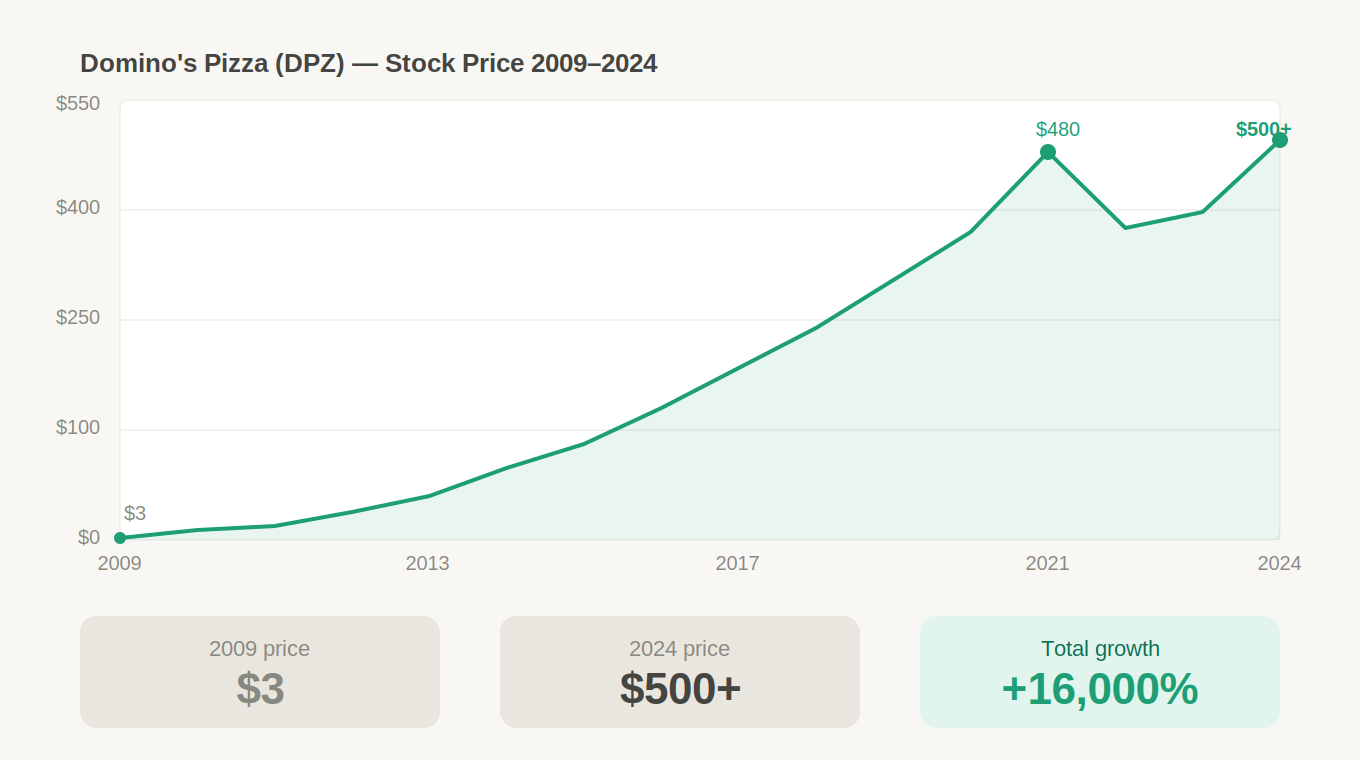
In 2009, Domino’s was losing. The stock had fallen to $3 a share. Customer satisfaction scores were at the bottom of the industry. The pizza itself was widely mocked.
Instead of only fixing the recipe, leadership asked a different question: what if we built a technology platform that happens to sell pizza?
They started with the product itself: a brutally honest admission that the old pizza wasn't good enough. The new recipe launched in 2010 and immediately improved perception and NPS. That early credibility was essential. But leadership knew a better pizza alone wouldn't build a lasting advantage. So they set out to build the system around it.
They began by digitising the entire ordering process. The Domino’s app launched in 2011, but it was the AnyWare platform that changed everything. Orders via tweet, text, smart TV, voice assistant, even a pizza emoji. Behind every channel was a unified customer profile that remembered everything: your favourite order, your payment method, your address. No friction. No re‑entry.
Between orders, the system didn’t go quiet. Saved preferences powered a Nurture engine: push notifications, one‑click reorder emails, and personalised prompts that kept the brand warm and the next purchase effortless.
Then they built the Tracker. While the pizza was being made, customers could see exactly where it was: order placed, prep, bake, quality check, out for delivery. This wasn’t just a gimmick. It turned waiting into engagement. And engagement into loyalty. Tracker views became a habit, and habits drove reorders.
Piece of the Pie Rewards launched in 2015 and now has over 35 million members. It is not a separate programme. It is woven into every digital interaction. Points accrue automatically. Rewards are a tap away. The loyalty engine feeds directly into repeat purchase behaviour.
The financial results tell the story. Domino’s stock rose from under $3 in 2009 to over $500 by 2024. Digital orders now account for the majority of sales. Same‑store sales growth has been positive for most of the last decade, with only a handful of soft quarters, particularly during the early 2020s. The pizza recipe did improve. But the system is what scaled.
Takeaway: Domino’s didn’t just make a better product. They built a complete growth system. The improved pizza (product) rebuilt trust. Ordering (Attract) became effortless. Saved preferences and reorder prompts (Nurture) kept the brand alive between purchases. The digital checkout (Convert) removed every barrier. The Tracker (Activate) built habit. Loyalty (Monetize) and reorder‑and‑refer loops (Amplify) kept customers coming back and bringing others. Every stage fed the next, and that connected engine turned a struggling pizza chain into a global tech‑powered growth story.
Sources: Domino’s Pizza Annual Reports, 2010–2023; QSR Magazine; Harvard Business Review, “Domino’s Pizza: A Case Study in Organizational Transformation,” 2015; Domino’s Investor Day presentations; Company‑reported loyalty membership figures, 2023.
Trend to Watch
The businesses that treat their operations as a connected product are separating from those that don’t. Domino’s didn’t think of itself as a restaurant that built an app. It thought of itself as a technology platform that happens to sell food. That framing changed every decision.
Right now, most businesses are still building disconnected digital tools: an app here, a loyalty card there, a chatbot on the side. The winners are the ones who connect those tools into a single, seamless system that moves customers from first purchase to lifelong loyalty without friction.
The Domino’s playbook is replicable. But it requires a shift from thinking about marketing, product, and operations as separate departments, and toward thinking about a single growth engine that powers everything.
If you want to see what a full‑stack growth system looks like for your business, I put together a free PDF that walks through the six stages stage by stage → Reply "AI" and I'll send it straight to your inbox.
Or take the faster route: book a free Growth Audit and my team will map your full customer journey, show you the biggest leak, and walk you through exactly how to fix it.